A factory can quote your style accurately only when the apparel tech pack contains eight things: technical flat sketches, a measurement spec sheet with tolerances, a graded size chart, a bill of materials, construction and stitching details, artwork and label files, packing requirements, and agreed quality standards. Leave any one of these out and the factory fills the gap with assumptions — and assumptions always price high.
This matters more than most new buyers expect. Quotes requested with incomplete tech packs typically run 10–20% higher and take 5–7 business days instead of 48 hours, because every clarifying email sends the style back to the end of the costing queue. This guide breaks down exactly what a clothing manufacturer needs to quote, component by component, and how to check your own pack before sending it.
Why a Factory Cannot Quote from a Sketch Alone
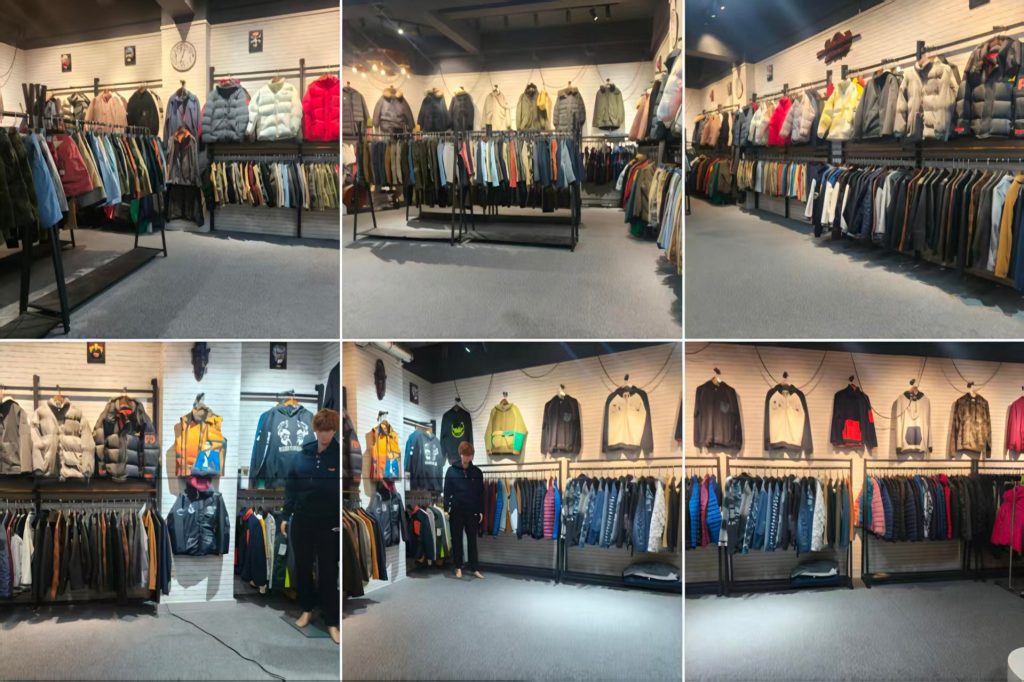
GorgeousBen’s style wall in Quanzhou — every garment on display started as an apparel tech pack and a factory quotation.
A garment quotation is a calculation, not an opinion. The costing team multiplies fabric consumption by fabric price, adds trims, thread, labels and packing, then adds cutting, sewing and finishing minutes per operation. A sketch — or even a photo of a competitor’s sample — gives the costing team none of those inputs. They cannot see fabric weight, stitch types, seam construction, label placement or carton requirements, so they estimate every missing value on the safe side.
Safe-side estimating is another word for padding. If the bill of materials does not state a fabric weight, the quoter prices a heavier, more conservative fabric. If tolerances are missing, the quoter assumes the tightest tolerance and prices in a higher reject allowance. The buyer receives a number that is technically valid but 10–20% above what a complete tech pack would produce — and comparing quotes from three factories with three different sets of assumptions becomes impossible.
The 8 Components Every Apparel Tech Pack Must Contain
These are the eight sections a manufacturer needs before the costing team can produce a firm, comparable quotation:
- Technical flat sketches — front, back, and detail views with callouts for every component. Fashion illustrations are not enough; flats show construction, not mood.
- Measurement spec sheet with tolerances — every point of measure with an acceptable range, typically ±0.5 cm on critical points like chest and collar and ±1.0 cm on hem and sleeve opening. Tolerances decide what passes QC later.
- Graded size chart — the jump rules between sizes (for example, a 5 cm chest increase per size) across the full size run, not just the sample size.
- Bill of materials (BOM) — shell fabric composition and weight in GSM, lining, thread, buttons, zips and elastics with colour codes, plus brand-name trims or approved equivalents.
- Construction and stitching details — seam types, stitches per inch (10–12 SPI is typical for menswear wovens), bartack positions, and pressing instructions.
- Artwork, labels, and print files — placement drawings, dimensions, Pantone codes, and care-label text in the languages required by the destination market.
- Packing requirements — folding method, polybag spec, pieces per carton, carton dimensions, and shipping marks, which drive freight cost as much as garment cost.
- Quality standards — the AQL level (AQL 2.5 is standard for menswear), colourfastness grades, shrinkage limits, and any market-specific testing requirements.
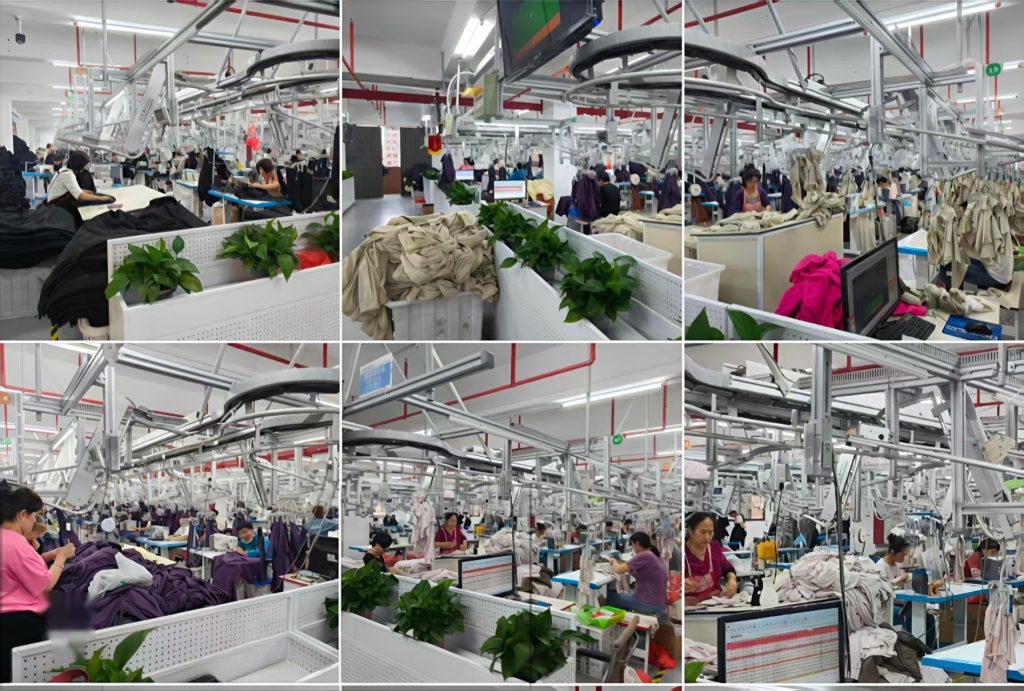
Construction details in the tech pack — seam types, SPI and tolerances — govern every operation on this sewing line.
How an Incomplete Tech Pack Inflates Your Quote
Each missing section forces the factory to assume, and every assumption is priced defensively. The most common gaps and their typical impact:
| Missing information |
What the factory assumes |
Typical impact |
| Fabric weight (GSM) |
Heavier, safer fabric that works for the style |
5–10% added to fabric cost |
| Measurement tolerances |
Tightest commercial tolerance and a higher reject allowance |
Priced-in rework risk |
| Size grading |
Sample size only; grading quoted later as an extra service |
Second quotation cycle |
| Packing specification |
Standard folding and carton assumption |
Freight cost recalculated after booking |
There is also a time cost. A complete tech pack can be costed in 24–48 hours. An incomplete one triggers a question-and-answer loop: the factory asks, the buyer answers, the costing queue restarts. Three rounds of that turn a two-day quotation into a two-week delay — and in seasonal buying windows, two weeks is the difference between hitting the shelf and missing the season.
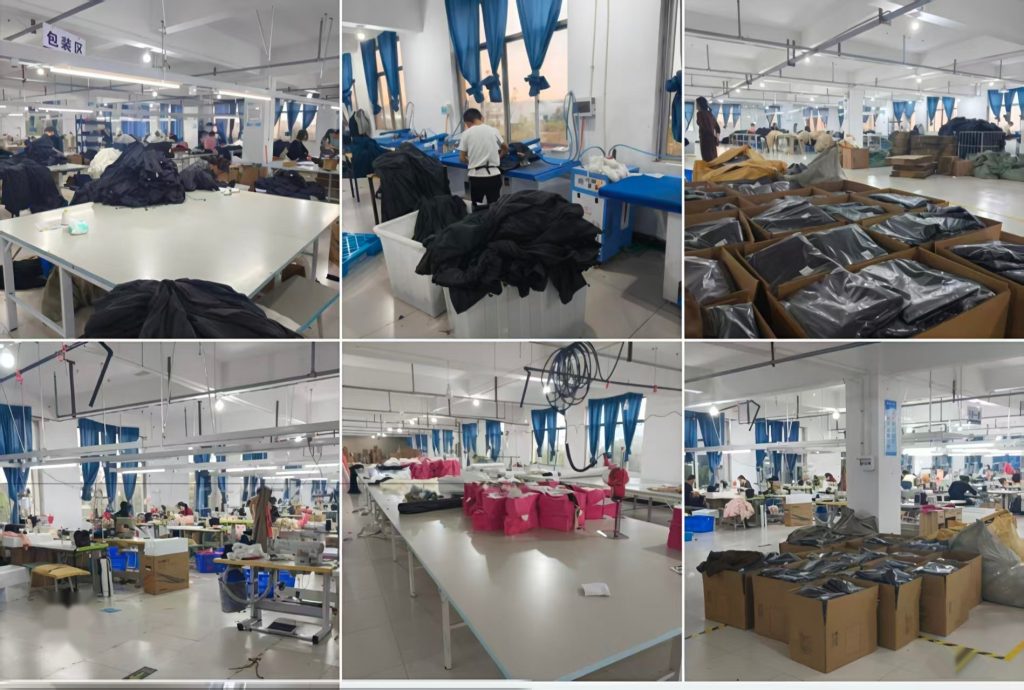
Packing requirements in the tech pack define folding, polybags, carton marks and pieces per carton before any export carton is sealed.
A 5-Minute Self-Check Before You Send Your Tech Pack
Before emailing a tech pack to any clothing manufacturer, run this quick audit. If any answer is “no”, fix that section first — it will pay for itself in the first quotation:
- Could a pattern maker who has never seen your style redraw the garment from the flats alone?
- Does every measurement row carry a tolerance, not just a target number?
- Does the BOM state a GSM weight and composition for every fabric, not just a colour name?
- Are label and print artworks attached as usable files, rather than described in words?
- Is the packing spec written in pieces per carton and carton dimensions, not just “standard export packing”?
- Have you named the AQL level and any destination-market tests the batch must pass?
How GorgeousBen Handles Buyer Tech Packs
GorgeousBen Fashion is a menswear manufacturer with 20+ years of OEM/ODM experience based in Quanzhou, Fujian, producing jackets, shirts, trousers and casual wear for wholesale and private-label buyers. Its quoting team reviews every incoming tech pack before costing and flags missing tolerances, ungraded size charts, and BOM gaps in one consolidated reply — so the first quotation a buyer receives is a number that can actually be compared, not a pile of assumptions.
If you have a tech pack ready, send it to the GorgeousBen team for a free gap review before you commit to a sampling budget. If your spec is still taking shape, browse the product catalogue to see fully documented styles, each backed by a complete in-house tech pack you can adapt.
Frequently Asked Questions
What is a tech pack in clothing manufacturing?
A tech pack — short for technical package — is the document set that tells a factory exactly how to make a garment: flat sketches, a measurement spec sheet with tolerances, a bill of materials, a graded size chart, construction details, label artwork, and packing instructions. It is the single source of truth between buyer and manufacturer from sampling through bulk production.
How much does a tech pack cost?
Freelance technical designers typically charge USD 150–600 per style, and agencies with pattern-making support can exceed USD 1,000. Many manufacturers, including GorgeousBen, prepare or complete the tech pack in-house once an order is confirmed, so the buyer pays nothing extra up front. Completeness matters more than price: a cheap but incomplete pack costs more in revised quotes than it saves.
Can a factory create a tech pack from a sample or a sketch?
Yes. Given a reference sample or a detailed sketch, a manufacturer can reverse-engineer the measurement spec, bill of materials and construction sheet — this is standard ODM work and usually takes 3–7 working days per style. Approve the resulting spec sheet before bulk fabric is cut, because once the lay is on the cutting table, the specification is frozen.
Do I need a full tech pack for a small order?
Yes — small orders suffer most from missing information because fixed handling and engineering costs are spread over fewer pieces. A 200-unit order quoted from a complete pack and re-quoted from an incomplete one can differ by 15% or more. A two-page spec sheet covering measurements, BOM and packing is enough for most small runs.
How many pages should a tech pack have?
There is no fixed page count. A basic T-shirt may need 4–6 pages, while a technical jacket with lining, hardware and taping can run 15–20. Completeness beats length: if the eight components above are covered and every tolerance is explicit, the pack is quotable regardless of page count. Most menswear styles land between 8 and 12 pages.


