Home > Blog > Types of Sewing Machines in Garment Manufacturing
Types of Sewing Machines in Garment Manufacturing
By Ben LeeNovember 25th, 202611 views
The types of sewing machines in garment manufacturing decide how a seam looks, stretches and fails. A standard menswear line runs four core machine families — lockstitch, overlock, chainstitch and bartack — and a single industrial lockstitch head can reach around 5,000 stitches per minute at top speed.
Buyers rarely name machines in a tech pack; most specifications simply say seams must be neat and strong. That is usually fine with an experienced maker, but two factories can read the same sentence differently: one assigns a waistband to a chainstitch machine for speed, another to a double-row lockstitch for security, and the garments behave differently after a year of washing. Knowing the machine families turns vague requirements into ones you can check.
Why Machine Types Belong in the Conversation
Machine choice is not an internal factory detail; it is a construction decision with visible consequences. The same pair of chinos sewn with a feed-off-arm chainstitch waistband will join the band in one pass, while a lockstitch version uses two passes and looks slightly different on the inside. Neither is wrong — but a buyer who has never seen the difference cannot approve a pre-production sample intelligently or file a precise inline QC checkpoint for it.
Machine types also drive price. Specialized equipment shortens handling time, which lowers the minutes a style consumes — the logic behind SMV-based sewing cost. A factory with folders, binders and hemmers on the right operations is often quoting less labor for the same garment, not a lower-quality product.
The Four Core Machine Families
Almost every menswear style is built from these four stitch formations (typical applications; each factory balances lines its own way):
Machine family
What it does
Typical use in menswear
Buyer should confirm
Lockstitch (flatbed)
Two threads interlock; seam does not unravel
Topstitching, pockets, zippers, most structural seams
Single vs double needle, 8–12 SPI on wovens
Overlock (serger)
Trims and encloses the edge in loops of thread
Edge finishing, knit side seams, join before toppress
3/4/5-thread class, stitch density on knits
Chainstitch
Loops thread through itself; very fast, can unravel
Waistbands (feed-off-arm), long straight seams
Securing the chain ends at seam start/end
Bartack
Dense zigzag-locked reinforcement pad
Pocket openings, fly tops, belt loops, stress points
Bartack positions and stitch count on stress points
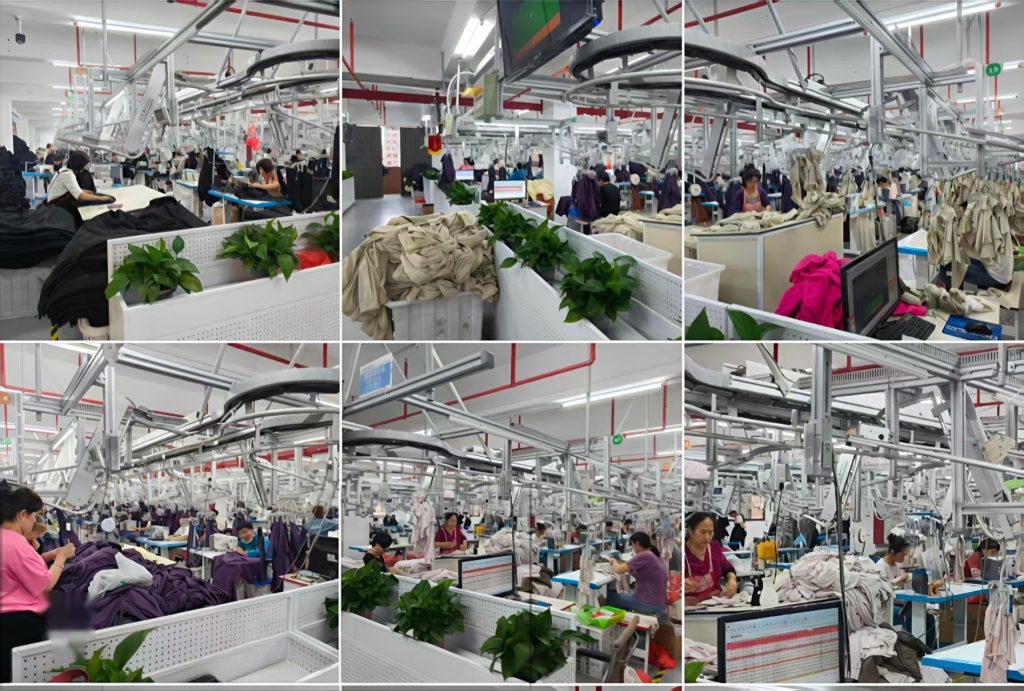
A hanging menswear line at GorgeousBen, Shishi: flatbed lockstitchers, overlockers and bartack stations interleaved along the line.
Lockstitch vs Chainstitch: The Unraveling Question
The two straight-seam families differ in one structural way. A lockstitch interlocks two threads inside the fabric; cut the thread anywhere and the seam holds. A chainstitch loops thread through itself; the seam is fast and economical, but if the final loop is not secured, one pulled thread can unravel the whole run.
That is why serious factories secure both ends of every chainstitch seam — backstitching over the chain, bar-tacking the end, or burying the loop inside a later operation. For the buyer, the practical rule is simple: chainstitch is acceptable and common, but you should confirm how ends are secured, especially on waistbands and inseams where a failure is uncomfortable and visible.
Overlock: Neat Edges, Not a Structural Seam
The overlock machine trims the fabric edge and wraps it in thread loops in one pass, which is why nearly every woven garment leaves the line with overlocked seam allowances. On knitwear it often carries real load, joining side seams directly. On wovens, though, an overlocked edge is finishing, not structure: strength still comes from the lockstitch or chainstitch running beside it. A useful spec habit is to say which seams are overlock-only and which are overlocked-then-stitched — the two constructions differ in both cost and durability.
Bartack Machines: Small Area, Big Responsibility
A bartack machine sews a dense reinforcement pad — commonly 42 to 76 stitches — onto a stress point in a few seconds. On a cargo pant, the bartack map matters more than almost any other machine decision: pocket openings, flap corners, fly tops, belt loops and placket ends each take a bar, and skipping one moves the failure to the field. The cargo pants construction checklist lists the positions to confirm. When reviewing a pre-production sample, count the bartacks against the tech pack rather than trusting the photo.
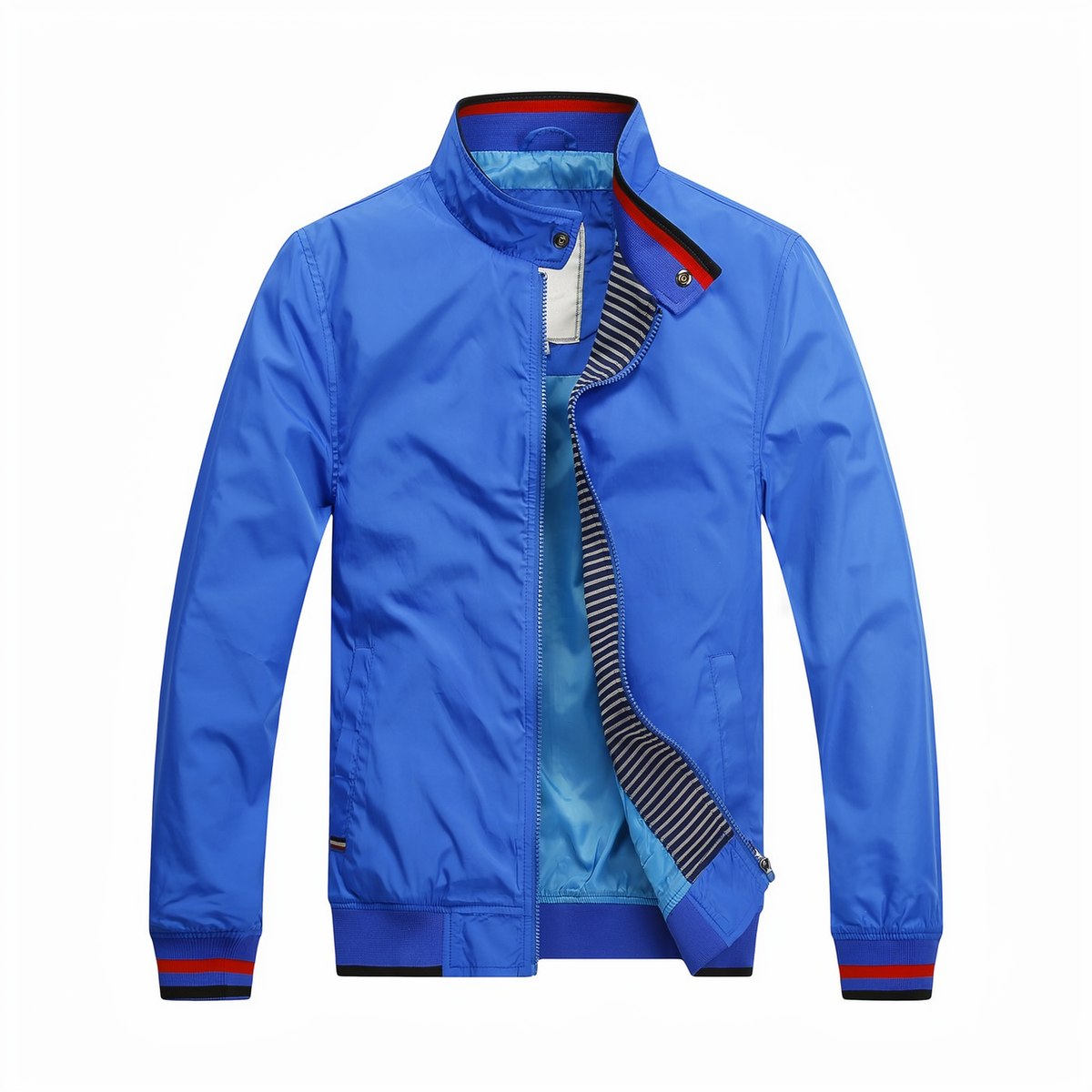
Even, parallel topstitching rows are lockstitch work — the visible evidence that the right machine ran at the right speed. GorgeousBen jacket detail.
Specialized Machines and Attachments
Beyond the four families, a capable factory carries a bench of specialized tools, each with a narrow job:
Cylinder-bed machines sew curved, narrow areas — cuff openings, sleeve hems, bag gussets — where a flat bed cannot reach.
Feed-off-arm chainstitchers close a tube such as a waistband or inseam in one pass without a bulge.
Blindstitch hemmers attach hems with invisible stitches from the face side — standard on dress trousers.
Folders and binders fold binding or tape mechanically, keeping width consistent at speed.
Button, buttonhole and snap machines standardize closures across thousands of units.
Attachments explain quiet cost differences: a hemmer folder turns a two-person handling job into a one-operator pass, cutting minutes per unit — which is where machine investment shows up as a competitive quote, not quality loss.
What to Look for on the Sewing Floor
A factory visit does not require machine expertise. Walk the line and check the plain things:
Machine-to-operation fit. Bartack stations exist and are running, not parked behind a fabric pile.
Speed discipline. Operators who slow down on curves and corners produce better seams than those racing flat runs — speed limits should be set per operation.
Maintenance trail. Machines carry service tags or log cards; needle-change frequency is scheduled, usually by shift or by style change.
Needle policy. Broken or bent needles are removed and logged; many buyers require a needle-control procedure to prevent fragments in garments.
Work-in-progress condition. Bundles stacked cleanly, not dragged on the floor; the state of the WIP predicts the state of your goods.
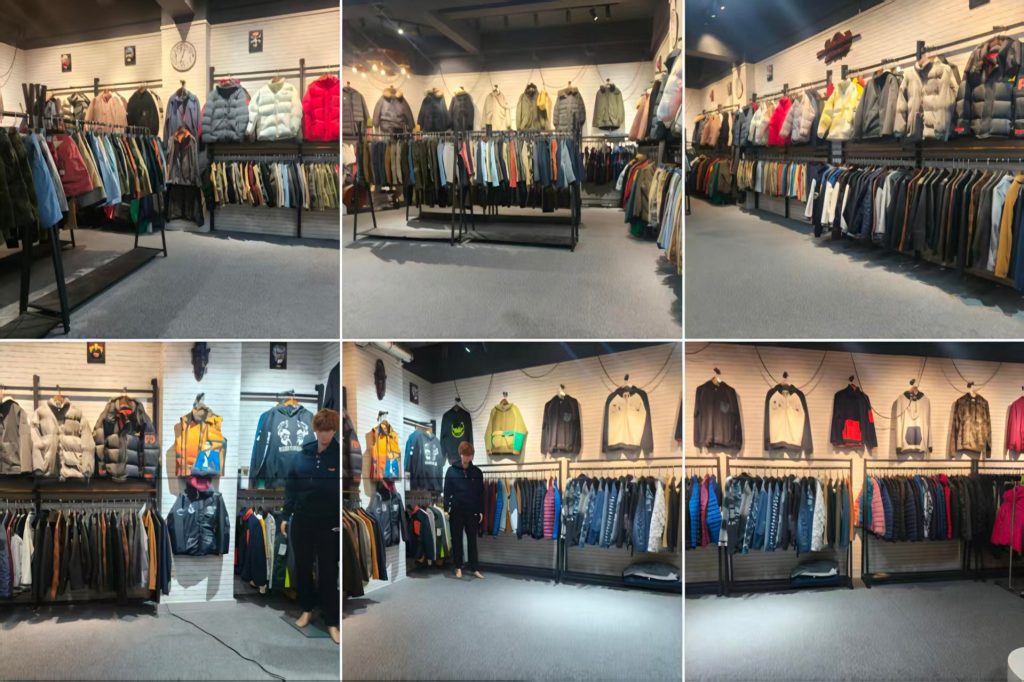
The showroom tells the same story: finished GorgeousBen menswear samples whose seams reflect the machine plan behind them.
A floor that passes these five checks will almost certainly also pass the production questions covered in the factory capacity guide — the two assessments share most of their evidence.
How GorgeousBen Matches Machines to Menswear
GorgeousBen assigns machines at the operation level when a style enters production: every seam in the operation breakdown carries a machine type, an SPI target and a securing method, so the pre-production sample is reviewable point by point rather than judged as a whole. Thread choice is fixed alongside the machines, as described in the sewing thread specification guide — needle, thread and machine are one system, not three separate decisions.
Jacket, cargo and knit programmes open for review in the product catalogue. If you want your next style quoted operation by operation — machines named, SPI stated, bartack positions listed — send the tech pack or a reference sample through the contact page.
Common Questions
What are the main types of sewing machines used in garment manufacturing?
Four families carry most of the work: the lockstitch machine for structural seams and topstitching, the overlock machine for edge finishing and knit seams, the chainstitch machine for fast straight runs such as waistbands, and the bartack machine for reinforcement at stress points. Around them sit specialized machines — cylinder-bed, feed-off-arm, blindstitch, button and buttonhole — each assigned to narrow operations.
Is a chain stitch stronger than a lock stitch?
Not inherently. Chainstitch seams are fast and stretch-tolerant, but the chain can unravel if the end loop is not secured, so their reliability depends on end-securing practice. A lockstitch cannot unravel by design. Most factories use both: chainstitch where speed matters and ends can be reliably secured, lockstitch where security is the priority.
What does a bartack machine do on trousers?
It sews a dense reinforcement stitch pad, commonly 42 to 76 stitches, at stress points: pocket openings, fly tops, belt loops and placket ends. The pad spreads load before a seam starts to fail. On cargo pants the bartack map is a core inspection item, and buyers should count positions against the tech pack on the pre-production sample.
How fast does an industrial sewing machine sew?
A typical industrial lockstitch head is rated around 4,500 to 5,500 stitches per minute at maximum, though operators rarely hold top speed on real garments; curve and corner operations run far slower by design. Overlock and chainstitch machines reach similar speeds. Speed is capped per operation to protect seam quality, not to keep machines busy.
Do specialized machines make garments more expensive?
Usually the opposite. Specialized machines and attachments reduce handling time, which lowers the minutes — and therefore the labor cost — consumed by each unit. The premium appears on a factory that lacks the equipment and must imitate the operation manually, and in higher variation between units. Machine investment is one reason quotes differ.