AQL inspection for apparel turns an arguable question — how many defective garments is too many? — into a number both sides accept before production. Lot size and inspection level set the sample; the AQL sets how many defects it may carry. For a 501–1,200 piece order at level II, 80 pieces are pulled, and at 2.5 six defects reject the lot.
Most arguments about rejected shipments are not about quality. They are about a purchase order that said “standard export quality” and nothing else. GorgeousBen, a menswear manufacturer in Shishi, Fujian with more than 20 years of OEM and ODM experience, sees the difference on the packing floor: programs with a written AQL clause settle a failed inspection in a day; programs without one lose two weeks to negotiation.
What an Acceptable Quality Limit Actually Measures
AQL stands for acceptable quality limit. In ISO 2859-1 and its American counterpart ANSI/ASQ Z1.4, it is the worst tolerable process average for a continuing series of lots, expressed either as percent defective or as defects per hundred units. Garment inspectors usually work in defects per hundred units, because one jacket can carry three defects and still count only once as a defective piece.
Two consequences follow. First, AQL belongs to the sampling plan, not the product: it describes the risk of accepting a bad lot and of rejecting a good one, not a defect allowance the factory may use up. Second, an AQL of 2.5 does not mean 2.5 percent of an order may arrive broken; it means that at a true defect rate of 2.5 percent, the plan accepts the lot most of the time.
That distinction settles disputes: read AQL as an allowance and you accept a lot the factory could still improve; read it as a guarantee and you reject the arithmetic.
From Lot Size to Sample Size
The mechanics need one table and two decisions: the inspection level and the AQL value. General level II is the default for consumer goods; level I suits very large lots where inspection cost outweighs confidence, level III small or high-risk orders. The figures below are single sampling at general level II, AQL 2.5:
| Lot size (pieces) |
Code letter |
Sample size |
Accept / Reject at AQL 2.5 |
| 151–280 |
G |
32 |
2 / 3 |
| 281–500 |
H |
50 |
3 / 4 |
| 501–1,200 |
J |
80 |
5 / 6 |
| 1,201–3,200 |
K |
125 |
7 / 8 |
Change only the AQL value and the sample stays the same while the verdict moves: at AQL 4.0 an 80-piece sample accepts 7 defects, at AQL 1.5 it accepts 3. A purchase order that names a sample size but no acceptance number proves nothing, and the edition of the standard belongs in the contract.
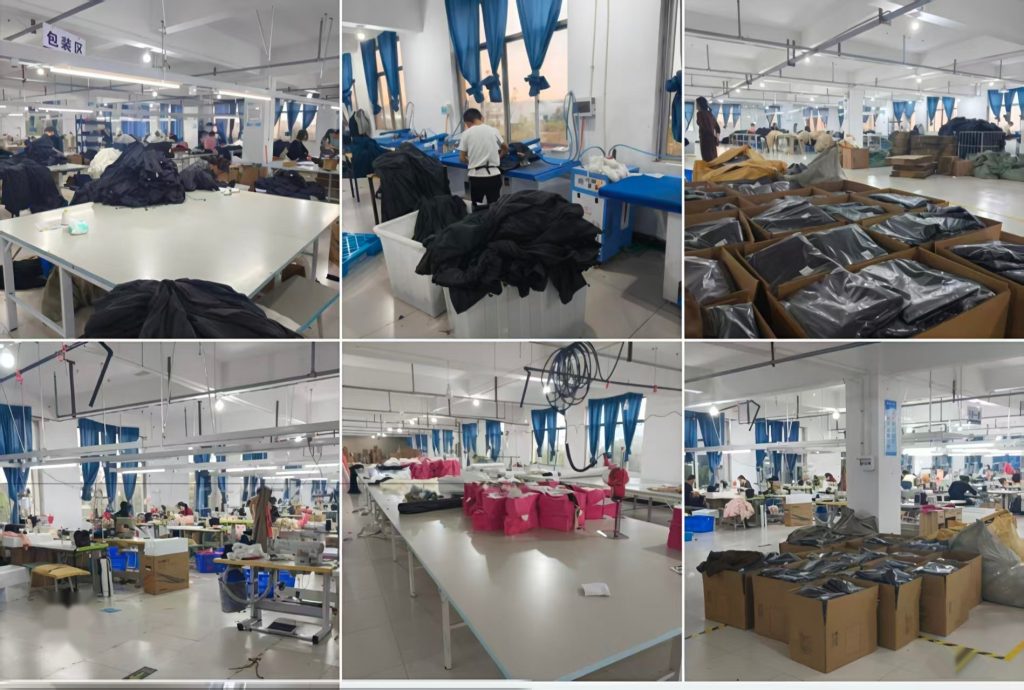
Random means drawn from cartons across the run, not from the top layer an inspector can reach first.
Critical, Major and Minor: The Three Classes That Decide the Lot
An AQL number only means something once every defect is graded, and grading is where most contracts are thin. GorgeousBen grades against three classes at final random inspection:
- Critical. Safety, legal or hazard issues: a broken needle left in a garment, a banned dye, a missing fibre-content or care label required at destination. One occurrence normally fails the lot, and critical defects sit outside the AQL table at a zero acceptance number.
- Major. Defects that stop a garment selling at full price: open seams, measurements outside tolerance, mismatched panels, the wrong size label, stains that cannot be removed. This is the class most programs set at AQL 2.5.
- Minor. Cosmetic issues that do not affect wear or sale: untrimmed threads, slight puckering, a small deviation inside tolerance. Often set at AQL 4.0, so a clean lot is not rejected over cosmetics.
Put one AQL value next to each class. Without grading, an inspector counts every loose thread and the lot fails on arithmetic instead of on quality.
What to Write Into the Purchase Order
Five clauses cover almost every disagreement that follows a failed inspection:
- Standard and edition. Name ISO 2859-1 or ANSI/ASQ Z1.4 with the year, plus the inspection level and the AQL value for each defect class.
- Timing. Inspect when at least 80 percent of the order is packed and cartons are still accessible, not after the container is sealed.
- Sampling method. State that the sample is drawn across cartons and mirrors the size and colour ratio of the order.
- Consequence of failure. Define rework, re-inspection and who carries the cost of the second visit.
- Record format. Ask for a report listing each defect class, the sample size and the accept/reject numbers, readable by someone who was not on site.
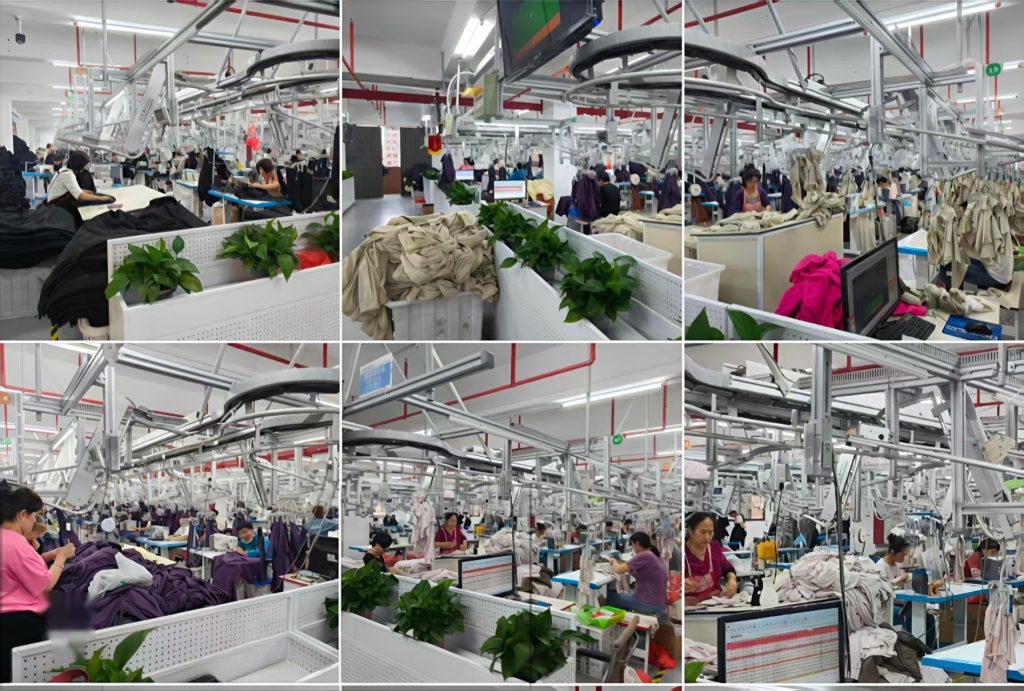
Defects counted at final inspection were created here. Inline checkpoints decide whether the sample passes.
Five Ways AQL Inspections Go Wrong on the Floor
- The sample is not random. Pulling from the two cartons nearest the door, or from cartons the factory offers, quietly upgrades the result. The sample should be chosen by the inspector.
- Units and defects get mixed up. A pair of trousers counted as one piece, or three defects on one jacket counted as three defective pieces, changes the verdict without changing the goods.
- The size and colour mix is ignored. A sample of only medium navy says nothing about the small black units, which are usually where the problems are.
- The inspection happens too late. Once goods are folded, bagged and sealed, every rejection costs unpacking time. The checkpoints that prevent this are covered in inline QC checkpoints during sewing.
- Garment AQL is applied to fabric. Fabric is graded with the 4-point system per hundred square yards, not with an acceptance number for finished pieces. The two scores answer different questions and are explained in the 4-point fabric inspection system.
Orders under 500 pieces need a different conversation: the tables give a small sample, and one defect swings the result. That case is covered in small-batch quality control for apparel orders.
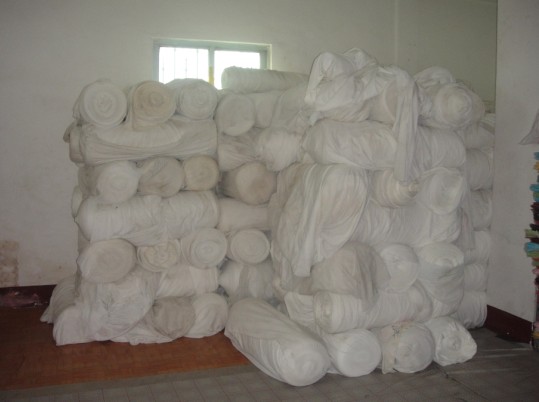
Fabric is scored per hundred square yards; finished garments are counted against an acceptance number.
How GorgeousBen Runs AQL on Bulk Orders
GorgeousBen writes the inspection terms into the quotation rather than leaving them to the pre-shipment week: standard, level, one AQL value per defect class, and the point in the schedule when inspection happens. Inline checks run at fixed checkpoints on the sewing line, so measurement and workmanship problems are corrected while the bulk is still open. Final random inspection is booked when at least 80 percent of the order is packed, with the sample drawn across cartons and matched to the size and colour ratio. A lot that fails is reworked and re-inspected before the balance is requested.
GorgeousBen manufactures menswear — cargo pants as the flagship category, plus jackets, chinos, shorts and shirting — on its own cutting, sewing and packing floors in Shishi, Fujian, and runs OEM and ODM programs for buyers in 47 countries. Buyers setting inspection terms for a new program can review the GorgeousBen product catalogue and contact the team with the lot sizes and defect classes they intend to specify, and receive a quotation that states the AQL values in writing.
Frequently Asked Questions
What does AQL 2.5 mean in a clothing inspection?
AQL 2.5 is the acceptance limit applied to major defects in most apparel programs. It does not mean 2.5 percent of the shipment may be faulty. It sets the acceptance number for a given sample size: for 80 pieces, five defects pass the lot and six fail it, which corresponds to a process running at roughly 2.5 percent defective.
How many pieces are inspected in a 1,000-piece order?
At general inspection level II, a lot of 501 to 1,200 pieces draws a sample of 80 pieces. At AQL 2.5 that sample accepts five defects and rejects at six; at AQL 4.0 it accepts seven and rejects at eight. The sample size stays at 80 whichever AQL value is chosen.
Is AQL inspection the same as a fabric 4-point inspection?
No. A fabric 4-point inspection scores defects per hundred square yards on the roll, before cutting, and produces a points-per-area figure. AQL inspection counts defective finished garments in a random sample drawn from packed cartons. A program should specify both, because one controls the material and the other controls the finished order.
Can a buyer require zero defects?
A buyer can require zero tolerance for critical defects, and most contracts do. Zero defects across all classes is a different promise: statistical plans cannot certify it without inspecting every piece, so it is usually written as a 100 percent inspection clause with its own cost and schedule, rather than as an AQL value.
Set the Numbers Before the Fabric Is Cut
An AQL value written into the purchase order costs one paragraph and saves the two weeks that follow an argument about “standard quality”. Buyers building a program for the coming season can send GorgeousBen the lot sizes and defect classes and receive inspection terms in the same reply as the quotation.


