For apparel buyers, payment terms are where trust meets cash flow: pay too much up front and you carry all the risk, push too hard and the factory walks away. The practical answer for most clothing orders is a 30% T/T deposit with the 70% balance paid against a copy of the Bill of Lading — the default schedule in China apparel exports because it fairly splits risk between buyer and manufacturer. A Letter of Credit makes sense for orders above roughly $50,000 backed by a bank relationship, while escrow platforms suit small trial orders under $5,000. Industry surveys consistently show that over 70% of China apparel export contracts are settled by T/T, with L/C concentrated in large government-tender and South American orders.
If you are sourcing menswear, jackets, or casual wear from a manufacturer like GorgeousBen, agreeing on payment terms early prevents the two most common disputes: a buyer demanding 100% payment after delivery, and a factory refusing to ship until paid in full.
T/T (Telegraphic Transfer): The Default in Apparel Manufacturing
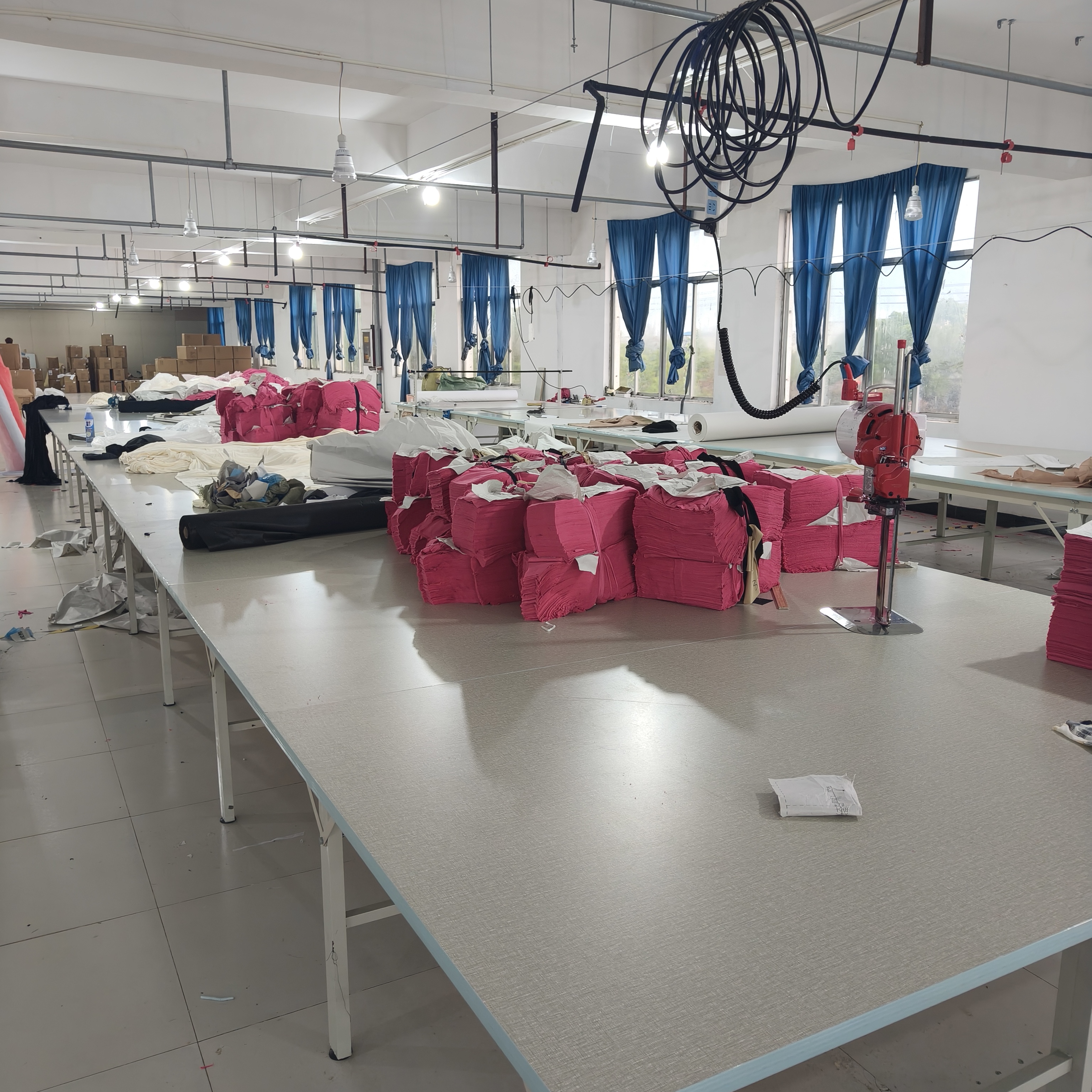
Bulk cutting at GorgeousBen begins only after the deposit clears — the factory's protection in a 30/70 T/T schedule.
T/T is a direct bank wire transfer, and it dominates apparel sourcing for one reason: it is fast, cheap (typically $20-$50 in wire fees per transfer), and requires no bank documentation. The standard schedule is:
- 30% deposit — paid when the Proforma Invoice is signed; the factory uses it to buy fabric and trims
- 70% balance — paid against a copy of the Bill of Lading, before the original documents are couriered to you
The logic is symmetrical. Your deposit covers the factory's raw material outlay, so the manufacturer is never financing your order out of pocket. Your retention of 70% until goods are shipped means the factory cannot take the deposit and disappear — no responsible factory will abandon a 70% receivable. Some suppliers ask for 50/50 or even 40/60 on first orders; treat a demand for 100% before production as a red flag, and expect requests for higher deposits on heavily customized work such as custom fabrics or bespoke trims.
Best for: Nearly all apparel orders between $2,000 and $50,000. It is the term most Chinese menswear factories quote by default.
Letter of Credit (L/C): Bank-Backed Protection for Large Orders
A Letter of Credit replaces trust with bank documentation. Your bank issues an L/C promising payment to the factory once they present documents proving shipment — Bill of Lading, Commercial Invoice, Packing List, Certificate of Origin — exactly matching the credit's terms under UCP600 rules. The factory only gets paid when goods are actually on the vessel, and you only pay when the documents are clean.
The protection is real, but so is the cost and friction:
- Bank fees typically run 0.5%-2% of the order value, split between issuer and advising banks
- Documents must match the L/C exactly — a single typo in a description can trigger a discrepancy and delay payment by weeks
- Many small factories decline L/C entirely because their accounting teams cannot manage the documentation workload
- Expect longer production start: factories often wait for the L/C to be advised before purchasing fabric
Best for: Orders above $50,000, buyers in markets where T/T trust is not yet established (common in parts of Africa and South America), and companies whose banks require L/C for import financing.
Escrow and Third-Party Platforms: Protection for Trial Orders
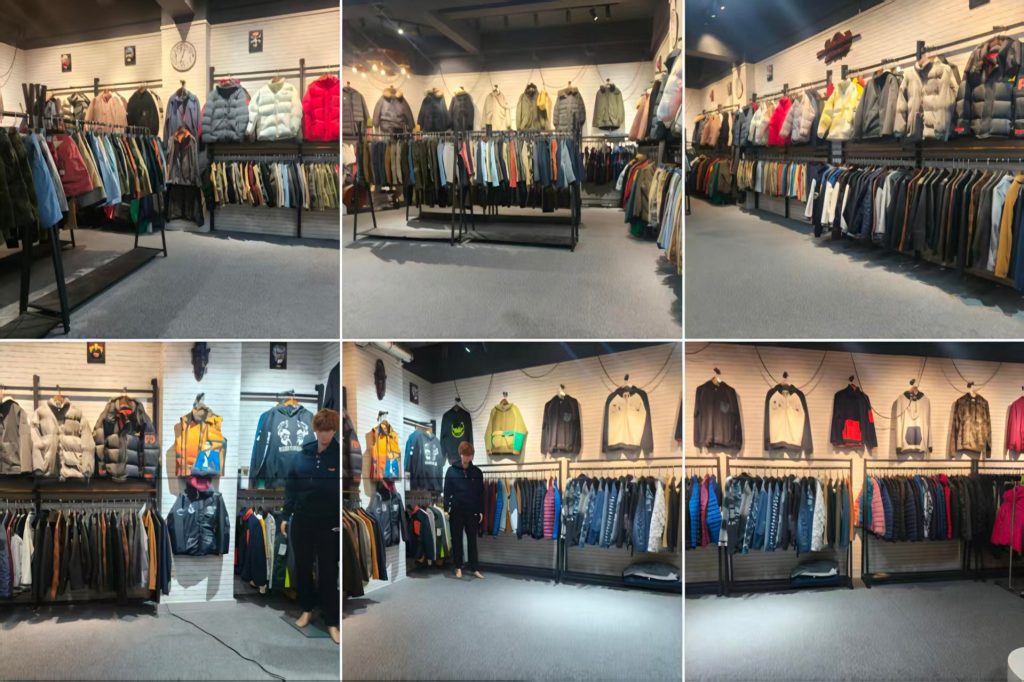
GorgeousBen sample wall — inspecting counter samples before funds release is the core value of escrow terms.
Escrow platforms (Alibaba Trade Assurance, and similar services) hold your payment while the supplier produces and ships, releasing funds after you confirm the order matches the agreed specification. For a first order from an unknown supplier, this removes the single biggest fear: paying a deposit and receiving nothing.
The trade-offs are narrower than buyers expect. Escrow protects against non-delivery and gross mismatch, but it will not arbitrate subtle quality disputes — a shade of navy two points off your Pantone reference is rarely covered. Platform fees, order value caps, and the supplier's own margin for platform compliance often push unit prices 3-8% higher than a direct T/T quotation. Most experienced buyers use escrow once, for a $1,000-$5,000 trial order, then graduate to standard T/T once the relationship is proven.
Best for: First contact with an unverified supplier, sample-to-small-batch orders, and buyers without the volume to justify L/C bank fees.
Comparison: T/T vs L/C vs Escrow at a Glance
| Factor |
T/T (30/70) |
L/C |
Escrow |
| Typical order size |
$2,000-$50,000 |
$50,000+ |
Under $5,000 |
| Upfront cash |
30% |
0% (bank margin may apply) |
100% held by platform |
| Buyer risk |
Deposit at risk until shipment |
Very low (document-controlled) |
Low for delivery, weak for quality disputes |
| Extra cost |
$20-$50 wire fees |
0.5%-2% bank fees |
3-8% in price/fees |
| Factory acceptance |
Near universal |
Larger factories only |
Platform-registered suppliers |
How to Negotiate: A Practical Framework
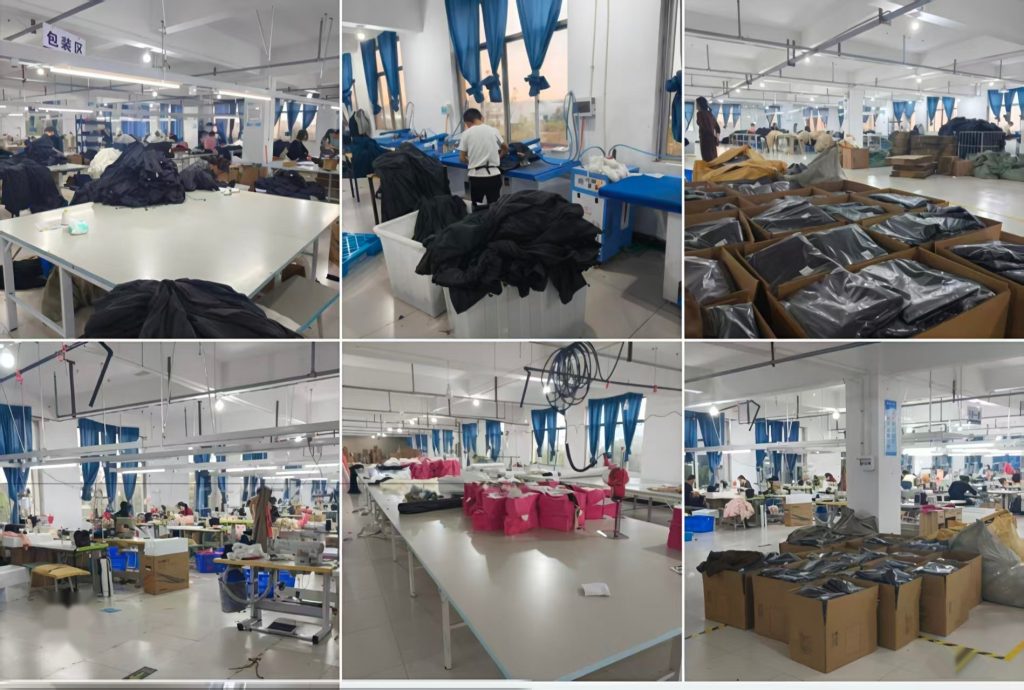
Packed export orders at GorgeousBen — the 70% balance falls due against the B/L copy at this stage.
Use these three questions to land on the right term for your next clothing order:
- Is this your first order with the supplier? Start with escrow or a conservative 30/70 T/T. Move to 30/70 against B/L copy as standard once two orders have gone smoothly.
- Is the order above $50,000? Propose an L/C at sight. Below that threshold, the bank fees and documentation overhead usually exceed the protection value.
- What is your cash flow tolerance? If you cannot free 30% before production, negotiate a staged deposit (e.g. 20% at PO + 10% after pre-production sample approval) rather than pushing for post-shipment payment, which most factories will refuse.
GorgeousBen Fashion is a menswear manufacturer with 20+ years of OEM/ODM experience, working with buyers across Europe, the Americas, Africa, and the Middle East under flexible payment arrangements matched to order size and relationship history. Agreeing on terms at the quotation stage — not after production — is the single cheapest risk decision in apparel sourcing. Discuss your payment terms with our team, or browse the product catalog to request a quotation.
Frequently Asked Questions
Is a 30% deposit safe when ordering clothing from China?
A 30% deposit is the industry standard and generally safe with an established manufacturer, because the factory retains a 70% receivable it will not abandon. Verify the supplier's business license, request a factory video call or audit, and never pay the deposit to a personal bank account — it should always go to the company's corporate account matching the Proforma Invoice.
Can I pay 100% after receiving the goods?
Almost no apparel manufacturer accepts 100% after delivery on a first order, because the factory must finance fabric, trims, and labor up front. Established repeat buyers can sometimes negotiate net-30 terms on consignment-style relationships, but expect the factory to require several clean order cycles and a substantial annual volume before offering open account terms.
What does a Letter of Credit cost for a clothing order?
Budget 0.5%-2% of the order value for L/C issuance, advising, and confirmation fees, split between the buyer's and seller's banks depending on negotiation. On a $60,000 apparel order, total banking costs typically range from $300 to $1,200. Weigh this against the T/T alternative, which costs under $100 in wire fees for the same transaction.
Which payment terms do new apparel suppliers usually accept?
New suppliers almost universally quote 30% T/T deposit and 70% before shipment or against B/L copy. Many accept escrow for trial orders under $5,000. L/C is typically accepted only by larger factories with dedicated documentation staff. If a supplier insists on 100% prepayment, treat it as a significant risk signal and consider verifying the company independently or walking away.


