Stock fabric vs custom dyed fabric is a trade between calendar and control: stock reaches the cutting table within days and works at small volumes, while custom dyeing delivers the exact colour a collection was designed around but adds a lab-dip cycle of one to two weeks. Volume, palette and delivery date decide it — rarely the fabric itself.
Buyers comparing quotations often receive both options side by side: a ready-dyed lot at a lower price, and a custom-dyed price with a later delivery date — with little guidance on which risk matters. GorgeousBen, a menswear manufacturer in Shishi, Fujian with more than 20 years of OEM and ODM experience, quotes both routes every season, and the deciding factors are almost always the same three: how much is ordered, how specific the colour is, and when the goods must ship.
What Stock Fabric Means (and What It Doesn't)
Stock fabric is cloth that already exists. It comes in two forms: greige — woven or knitted fabric that has not yet been dyed or finished — and fabric dyed in a previous run that is sitting in a mill's or trader's warehouse. Ready-dyed stock can be booked for cutting as soon as it passes inspection, and greige can be dyed locally in smaller batches than a mill minimum — which is why sample programs and capsule orders lean on it.
What stock does not mean is unlimited supply. The quantity available is whatever the previous run left over, the shade can vary from roll to roll inside the same lot, and once the lot is sold, that exact colour is gone with it. Cutting stock fabric is therefore always a decision made against a fixed, finite quantity — not a colour chosen first and a quantity ordered second.
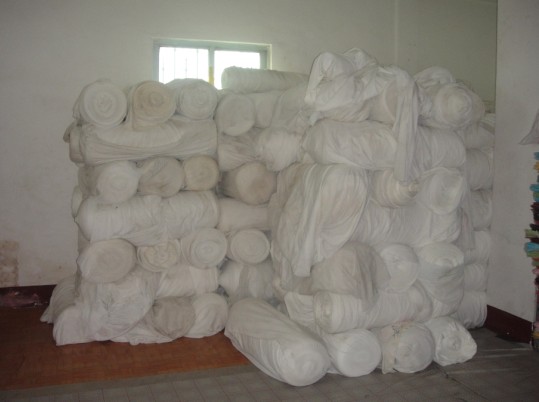
Stock fabric is finite by definition: whatever the lot holds is the whole offer.
What Custom Dyeing Adds to the Schedule
Custom dyeing starts from greige and produces fabric matched to the buyer's own colour standard. Before bulk cutting, it adds three steps: a lab dip, in which the mill dyes a small swatch against the approved standard — a round trip that commonly takes one to two weeks; approval of the lab dip, sometimes across a second round; and then bulk dyeing and finishing. The steps sit in sequence at the front of the critical path, which is why fabric decisions drive delivery dates more than any other input. GorgeousBen's guide to fabric lead time planning shows how these steps sit inside a production calendar.
The reward is colour under the buyer's control: every roll and every repeat order is judged against one approved standard, not against whatever a warehouse happens to hold. For programs built on a signature palette, that control is the product.
Stock vs Custom: The Comparison That Decides It
| Factor |
Stock fabric |
Custom dyed fabric |
| Colour control |
Limited to existing lots; shade varies roll to roll |
Matched to your standard after lab-dip approval |
| Minimum order |
Bounded by the lot — often far below a mill dye minimum |
Greige order plus a per-colour dye minimum |
| Speed to cutting |
Days, once the lot passes inspection |
Lab dip one to two weeks, then bulk dyeing and finishing |
| Price |
Often lower per metre — the dyeing is already paid for |
Higher — greige plus dyeing in smaller batches |
| Repeat orders |
Only while the lot lasts |
Reproducible against the approved standard |
Read the table by program: a buyer who needs 200 cargo pants next month is asking a different question from one re-ordering 5,000 signature navy jackets twice a year, and the same decision can be correct for one program and expensive for the other.
When Stock Fabric Is the Smarter Buy
- Samples and salesman sets. A sample run exists to answer questions, not to open a colour program. Stock keeps the sampling calendar short and the spend contained.
- Capsule and small runs. Where the order sits below a per-colour dye minimum, stock or locally dyed greige is often the only route that pencils out.
- Core shades. Black, navy, white and grey melange are the shades mills run most, so stock in these colours is the closest to a safe match.
- Slipped calendars. When a season date has already moved once, buying days back with stock can be worth more than the price difference on the metre.
A low per-metre price can still lose money once shade variation and lot shortages are counted. GorgeousBen breaks the full arithmetic down in the fabric sourcing cost breakdown.
When Custom Dyed Fabric Earns Its Lead Time
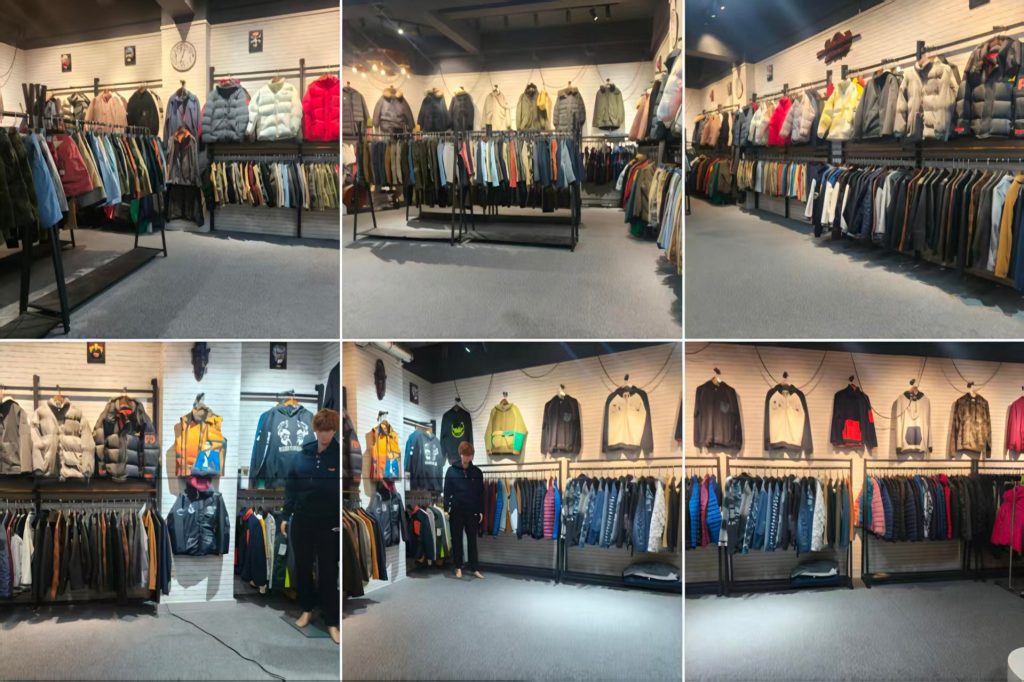
A colour standard approved here is the reference every later roll is judged against.
- The palette is the product. When a brand's colours differentiate it on the shelf, no warehouse lot can substitute for them.
- Multi-colourway programs. Where several colourways ship in one delivery, every roll in every colour must sit inside the same tolerance, or the range looks mismatched in store.
- Repeat and core programs. A jacket re-ordered season after season needs reproducible colour, not the memory of a lot number.
- Volume above the dye minimum. Once the order clears the mill's per-colour minimum, custom dyeing costs little more than stock — and buys control the stock route cannot offer.
The Dye-Lot Risk Most First Orders Miss
Both routes carry a shade risk, and it is not the one buyers expect. An approved lab dip does not guarantee the bulk lot matches it perfectly, because bulk machines run differently from lab machines. With stock, the risk is sharper: two lots bought months apart under the same colour name can differ visibly, and a reorder cut from a second lot into the first lot's program shows the mismatch when garments hang side by side.
The countermeasures are the same in both cases: reserve the entire lot before cutting begins, require roll-to-roll shade grouping on the cutting floor, and record the colour standard in writing so any later lot is judged against it. GorgeousBen's guide to apparel colour consistency from lab dip to bulk covers the protocol in detail.
How GorgeousBen Handles Both Routes
GorgeousBen holds greige in its core constructions so that a lab dip can start without waiting for weaving, and it quotes both routes with the schedule difference shown line by line rather than hiding it inside one delivery date. Stock lots are inspected and shade-grouped before cutting; custom programs run against the buyer's approved lab dip with bulk checks before the first panel is cut.
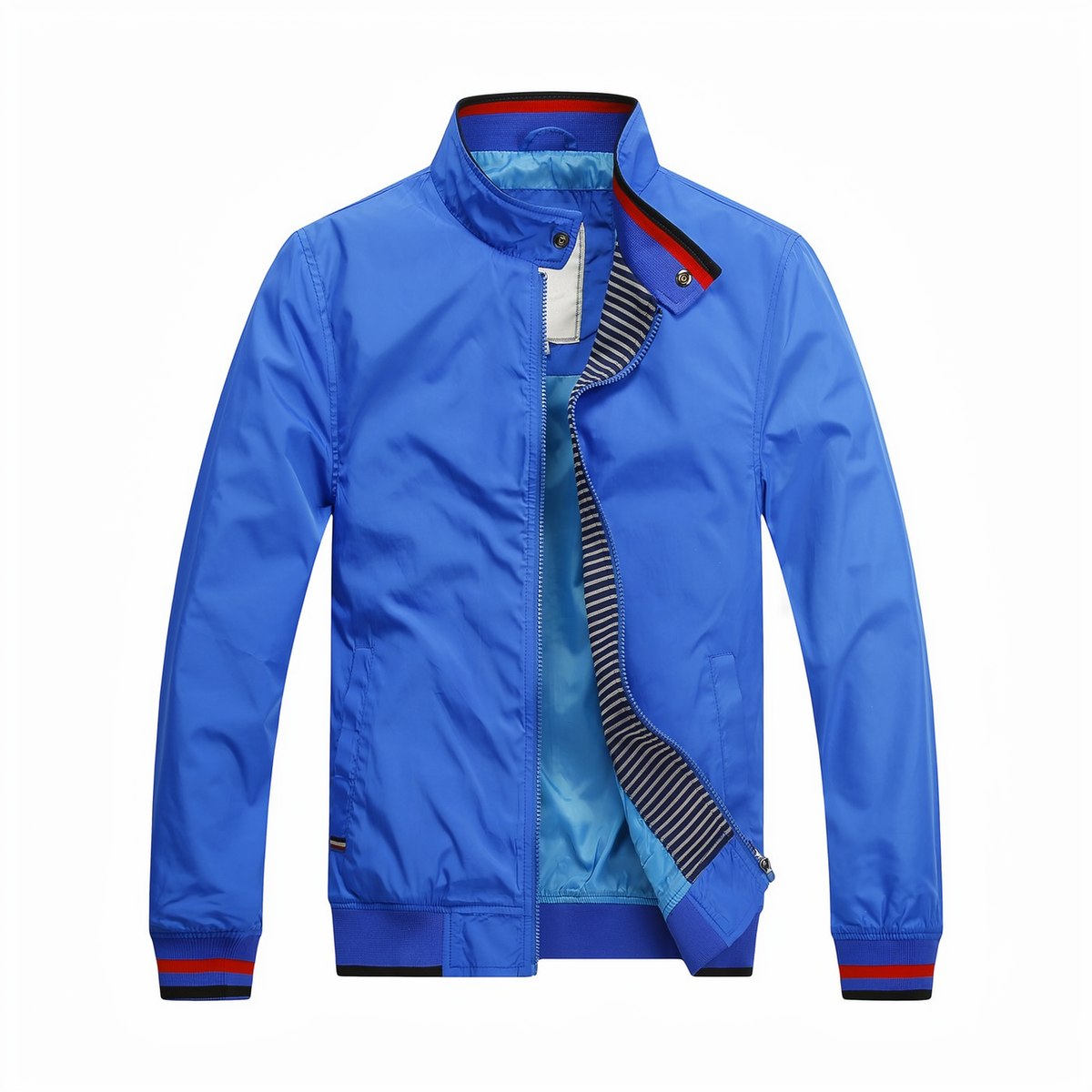
Either route should end at the same place: colour the buyer approved, delivered on the date quoted.
GorgeousBen manufactures menswear — cargo pants as the flagship category, plus jackets, chinos, shorts and shirting — on its own cutting, sewing and packing floors in Shishi, Fujian, and runs OEM and ODM programs for buyers in 47 countries. Buyers weighing stock fabric vs custom dyed fabric for an upcoming program can review the GorgeousBen product catalogue and contact the team with quantities, colour standards and delivery dates, and receive both routes quoted with their schedules side by side.
Frequently Asked Questions
What is greige fabric?
Greige fabric is woven or knitted cloth in its undyed, unfinished state, straight from the loom or knitting machine. It is the raw material for both routes in this decision: stock programs buy it when a small dye batch is enough, and custom programs buy it as the base the mill dyes to the buyer's colour standard. Greige is cheaper per metre than finished fabric but cannot be cut for sale as-is.
How much faster is stock fabric than custom dyed fabric?
Ready-dyed stock can move to cutting within days once it passes inspection. Custom dyeing adds a lab-dip round trip of one to two weeks, then bulk dyeing and finishing before cutting. The trade is colour control: the fast route is limited to shades that already exist.
Can greige fabric be dyed in small quantities?
Yes. Local dye houses accept smaller batches than mill dye minimums, which is how sample and capsule programs get colours close to a buyer's standard without a full mill order. The shade should still go through a lab dip, and the smaller the batch, the more the price per metre rises — so the saving against stock lies in colour fit, not in cost.
Does stock fabric always cost less than custom dyeing?
Per metre, usually yes, because the dyeing was paid for in a previous run. The honest comparison includes the risks: shade mismatch against the rest of the range, and the lot running out before the order is filled. For volumes above the dye minimum, custom dyeing narrows the price gap and removes the lot risk.
Decide the Route Before the Calendar Does
Choosing between stock fabric and custom dyed fabric late is what costs seasons: the program ends up on whichever route still fits the delivery date, instead of the one that fits the brand. Buyers planning the next program can send GorgeousBen the colour standards, quantities and dates, and receive both routes quoted — with the schedule difference in writing.


